Problem
Graphite Connect was built for buyers, the companies that pay for it. Each new buyer brought tens to hundreds of thousands of its suppliers onto the platform, and the product had never been designed for them.
In testing, suppliers kept calling it confusing. When they got stuck, they complained to their buyers and filed support tickets with us.
Constraints
Suppliers ranged from one-person shops to enterprises, in every industry and at every level of technical skill. They also brought in no revenue.
Before designing anything, I had to make the case to leadership. I tied the work to metrics that were already being tracked: support load and customer relationships.
Decision
I ran it as one initiative of seven projects over more than two years. Three of them had the most impact.
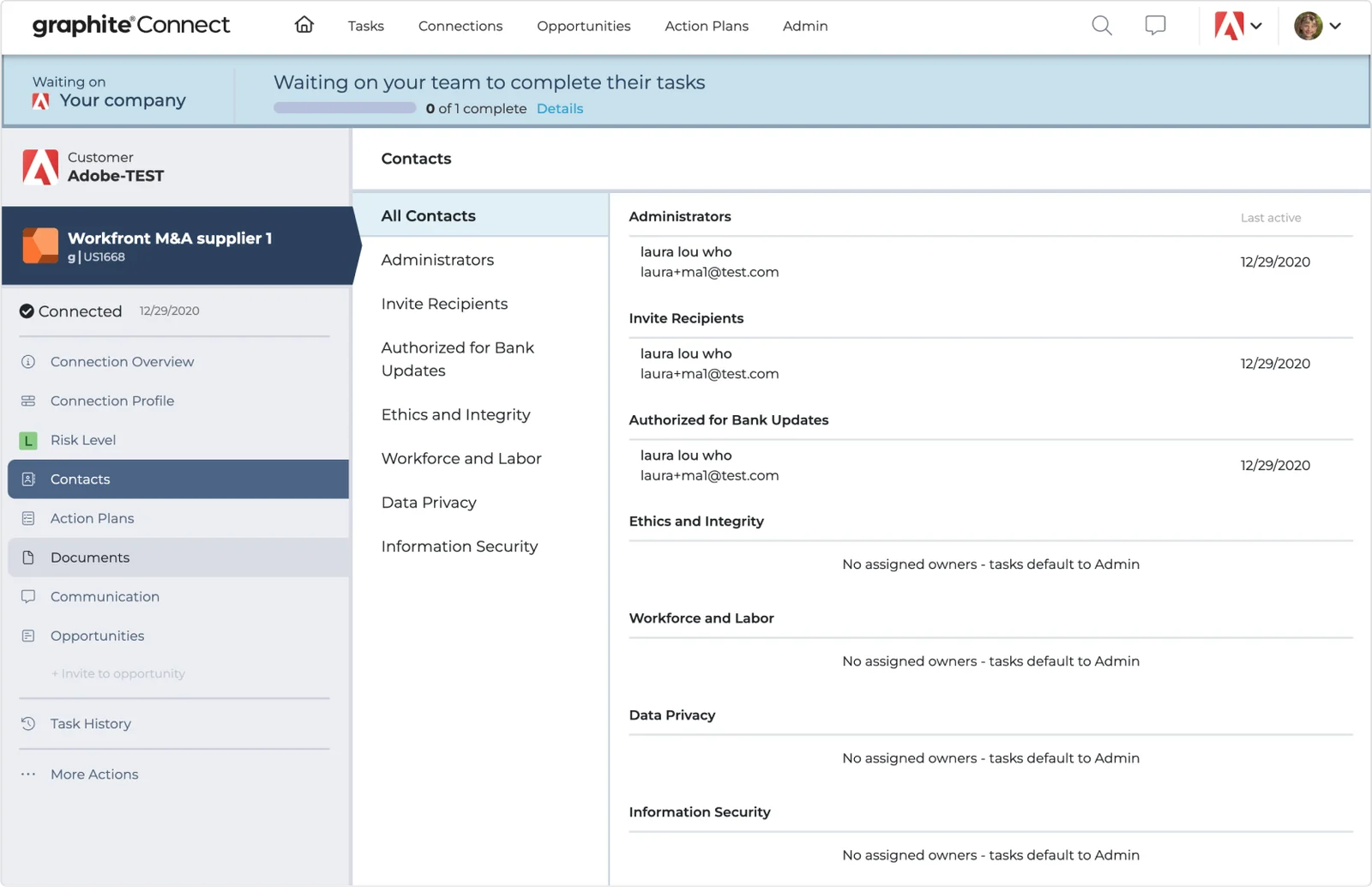
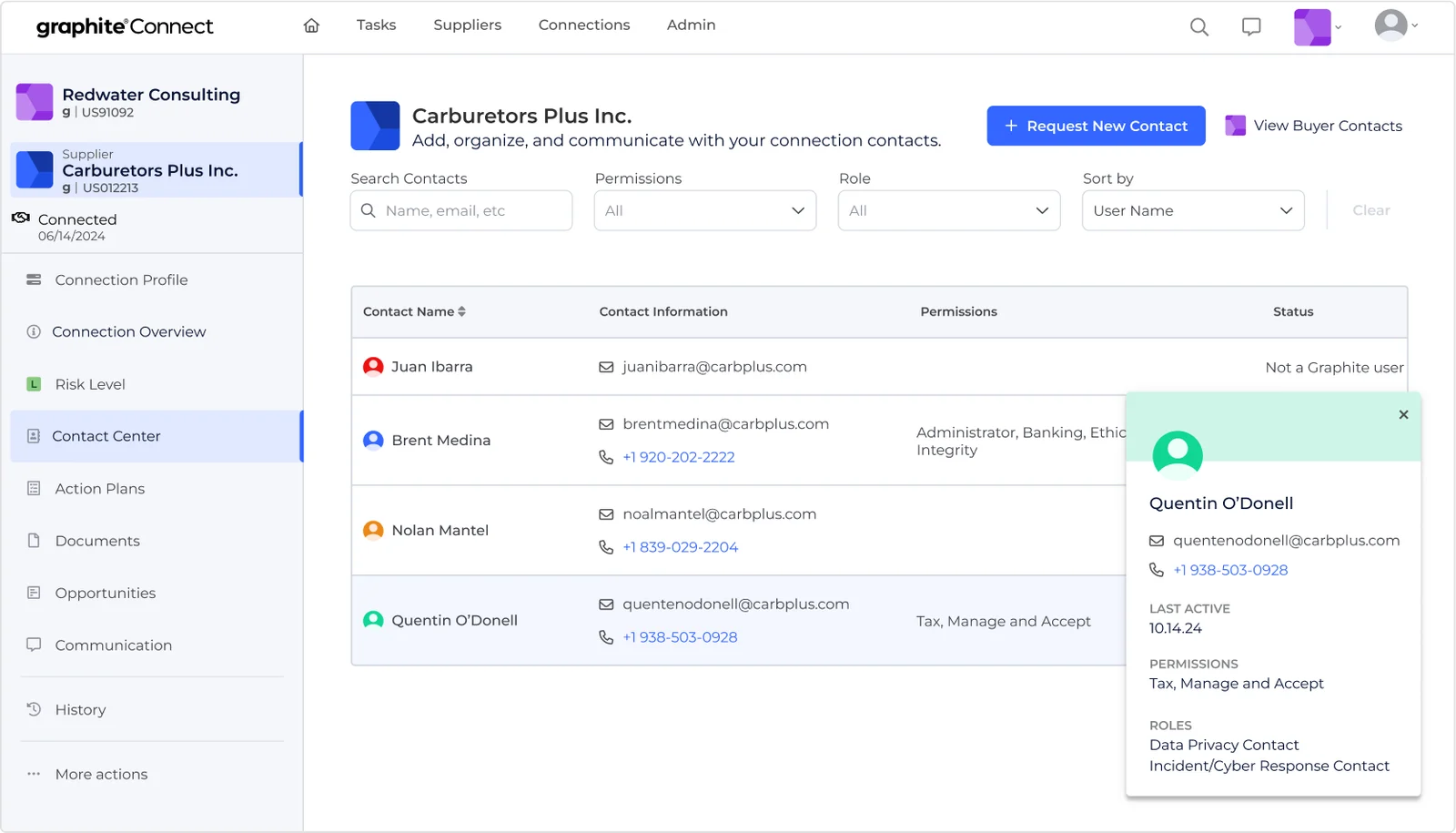
The Contact Center turned a static list of names into a directory buyers can import, so suppliers see who to contact and who holds which permissions.
After feedback from low-vision users, I audited the product for accessibility, met with disabled users and taught the team WCAG 2.2. Wireframes, tickets and QA now check accessibility before every release.
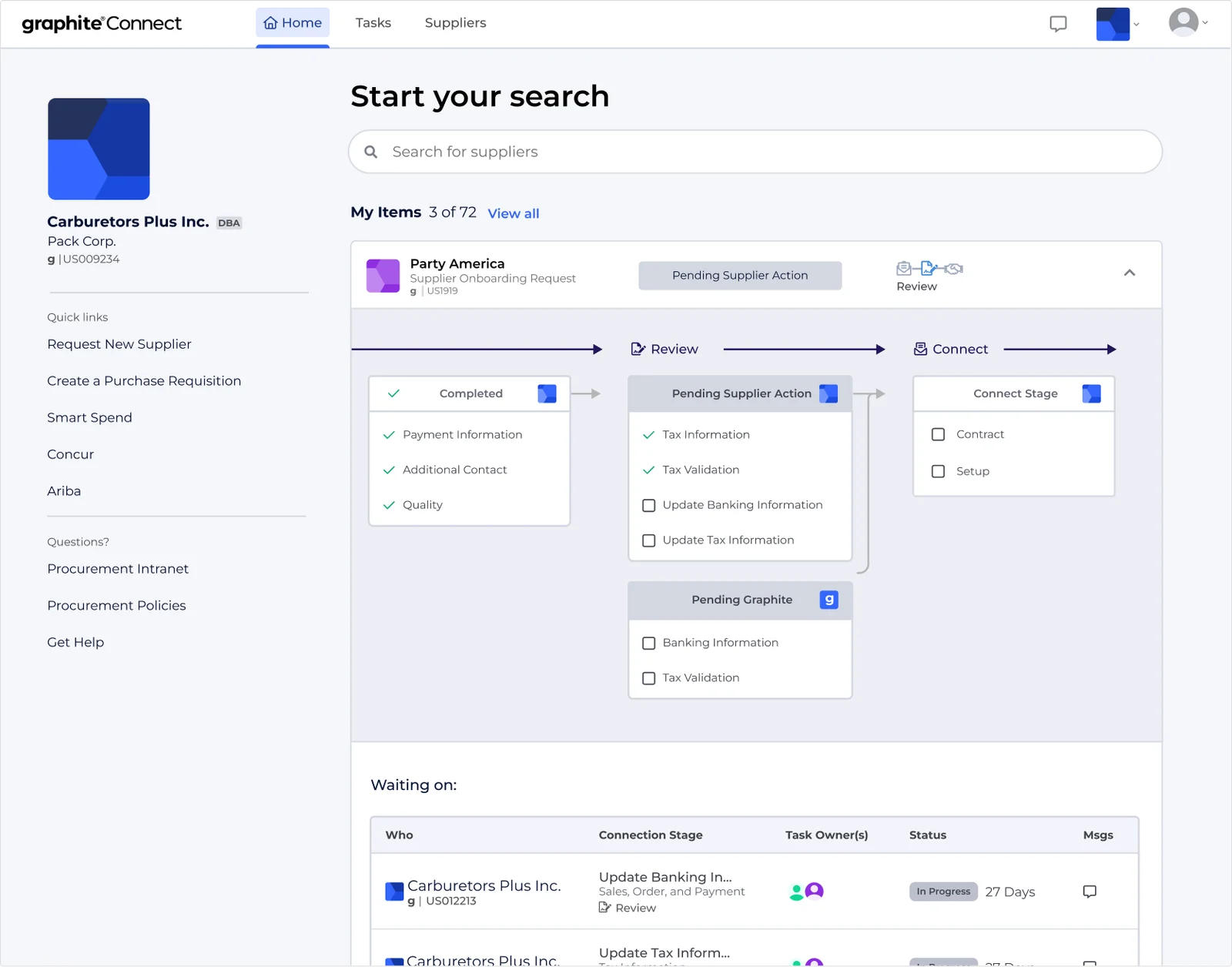
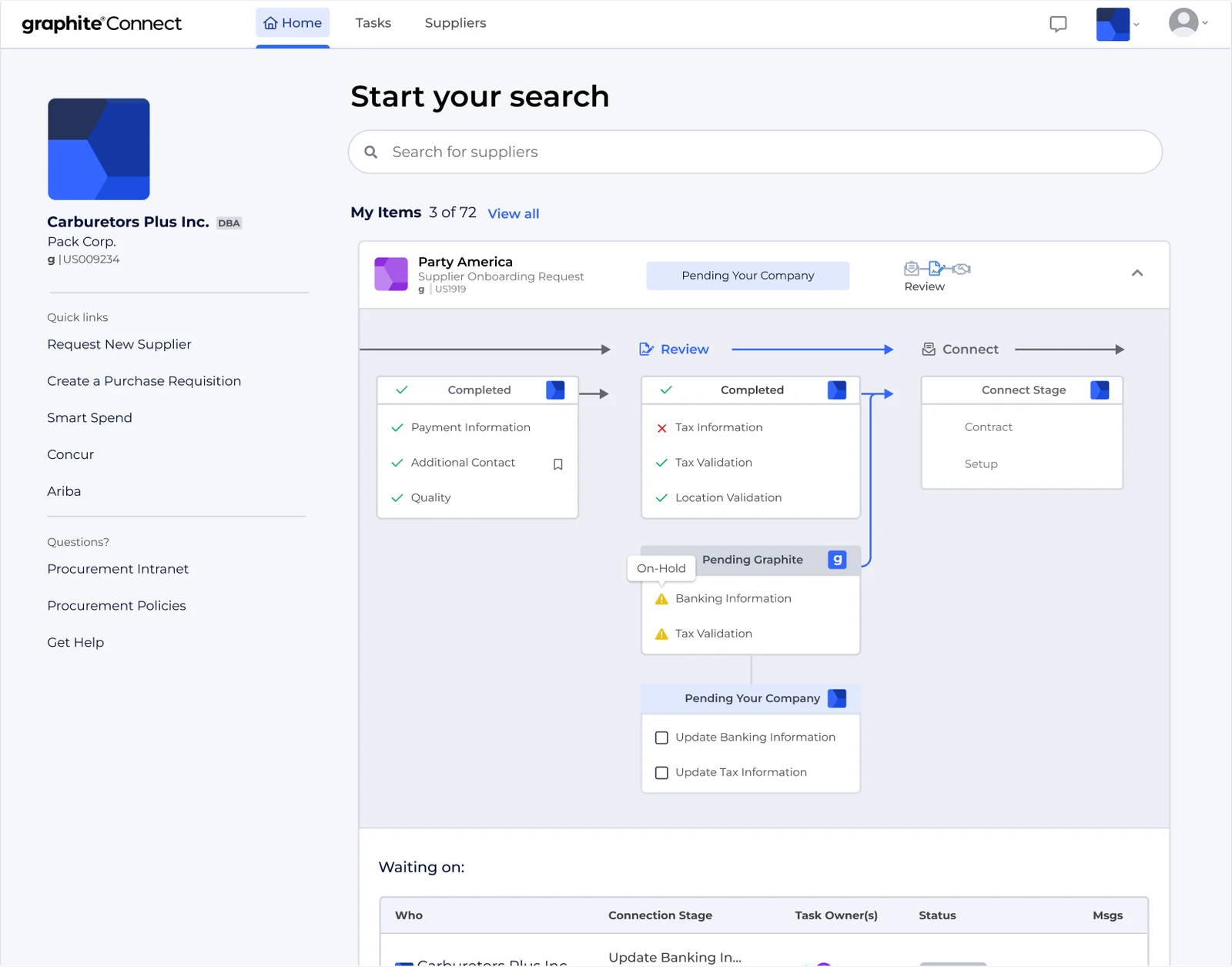
The visual workflow now opens a task drawer when you click an item, because suppliers expected items to be clickable. Stage titles show descriptions each buyer can write for their own suppliers.
Outcome
Support tickets stayed roughly flat, and trended down, while the user base grew more than threefold. Suppliers went from an afterthought to a persona the team designs for on purpose.
Reflection
The hardest part was earning the right to design for a user who brought no revenue. From making that case, I learned that prioritizing and advocating are part of the design job.